Our Goal is To Optimize Airway Health

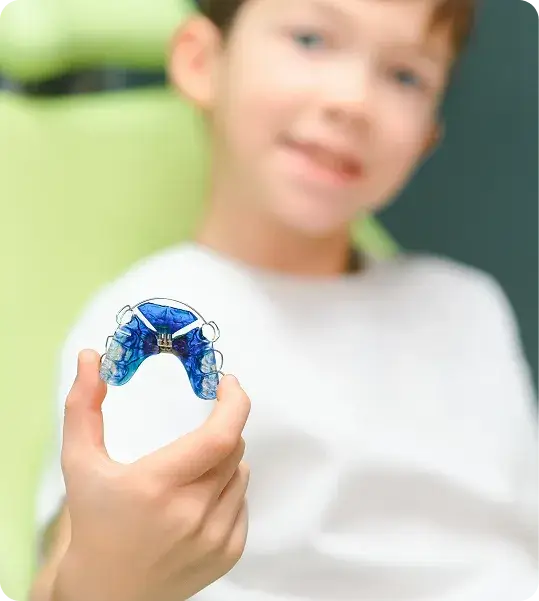
Growth appliances widen the palate, open the airway, and improve oral function. The result is deeper sleep, easier breathing through the nose, and healthier jaw development leaving room for adult teeth to erupt in their natural position.
How a child breathes shapes their airway, sleep, focus, and how the face develops. The nose is the organ designed for breathing. The mouth should only be for back up breathing. Most kids who struggle with sleep, behavior problems or growth and development are habitual mouth breathers.
Chronic mouth breathing forces the tongue to rest on the floor of the mouth instead of pushing up against the palate. Low tongue placement causes the palate to grow  narrow and teeth come in crooked. Traditional orthodontics waits for teeth to erupt in a crowded place  and then drags them through the bone causing more trauma to the teeth, bone and soft gum tissue. Dr. Jen had undiagnosed Upper Airway Resistance Syndrome and a tongue tie her entire life, and suffered through the side effects.  She watched the same patterns show up in her own children.
Growth guidance is how we widen the palate and guide the jaws forward while a child is still growing. We use custom printed bonded appliances to gently widen the jaws  paired with simple exercises that teach the tongue and lips how to do their  job. The goal is to create a wide palate and larger oral cavity so that the tongue can rest on the roof of the mouth, there is plenty of space for the permanent teeth to erupt and nasal breathing becomes easy and habitual. 

It’s Never Too Late

Growth guidance works best in young children, however teens, adults, and sleep patients have options too.
When the tongue stays in the floor of the mouth, the cheek muscles push the upper jaw to grow more narrow and high arched. A narrow roof of the mouth means a narrow floor for the nose which makes nasal breathing harder. The mouth opens to compensate. Eventually mouth breathing becomes habitual. When a child breathes through the mouth year after year, the jaws grow downward instead of forward. The face lengthens. The chin recedes. And the upper jaw narrows.
When that happens there is less room for the teeth. They come in crowded and rotated out of their natural position. A narrow upper jaw also means less room for the tongue. With nowhere to rest, the tongue falls back during sleep. When the soft palate and tongue collapse sleep is interrupted , the child wakes up to reposition and open the airway. Breathing turns shallow. Sleep gets restless.
By age 6, about 60% of facial growth is already done. By age 9, the upper jaw begins to fuse. By age 12, 95% of facial growth is complete. After that, braces can straighten the teeth. But the bone underneath does not change without intervention. By adulthood, the options shift from guiding growth to managing the skeletal problems that have already developed.
Airway problems  show up in teens who can’t sleep, in adults with TMJ pain, and in patients who’ve been on CPAP for years without ever being told why. For teens and young adults, we look at what options are available and what we can still guide.  For adults,  MARPE  treatment is an option. Alternatives to help with airway collapse include  oral appliance therapy, myofunctional therapy, and close coordination with sleep physicians. For patients already in sleep care, we work alongside your doctor to find the best path forward.

If Something Feels Off, It Probably is.

A lot of parents end up in our office after years of being told there’s nothing wrong. The pediatrician said it would pass or they would simply grow out of it. The orthodontist said wait until they are older, Family said you were worrying too much.
If you’ve been watching your child snore at night, breathe through their mouth, struggle to focus, or wake up exhausted, you’ve seen something real. Parents notice the things that providers, working in fifteen-minute visits, often miss.
You don’t have to know what the problem is. You only have to trust that there might be one. From there, we can take a look.

We Don't Wait for the Teeth to Tell us There is a Problem.

We look at the airway, the tongue, the facial muscles, growth patterns, how they rest and aesthetics altogether.
When a child comes into our practice, we are  not just looking at the teeth. We are watching how they breathe at rest. Where their tongue sits in their mouth. Whether their lips close without strain. How they swallow. Whether their face is developing forward, the way nature intended, or backward, the way modern diets and screen-bent head posture pull it.
The signs we watch for:
In many cases, all of these problems have the same root cause: under developed jaws and airways.

A Custom Expander That Widens Children' s Palates from the Inside Out

Designed to guide jaw growth and airway development during the years a child is still growing.

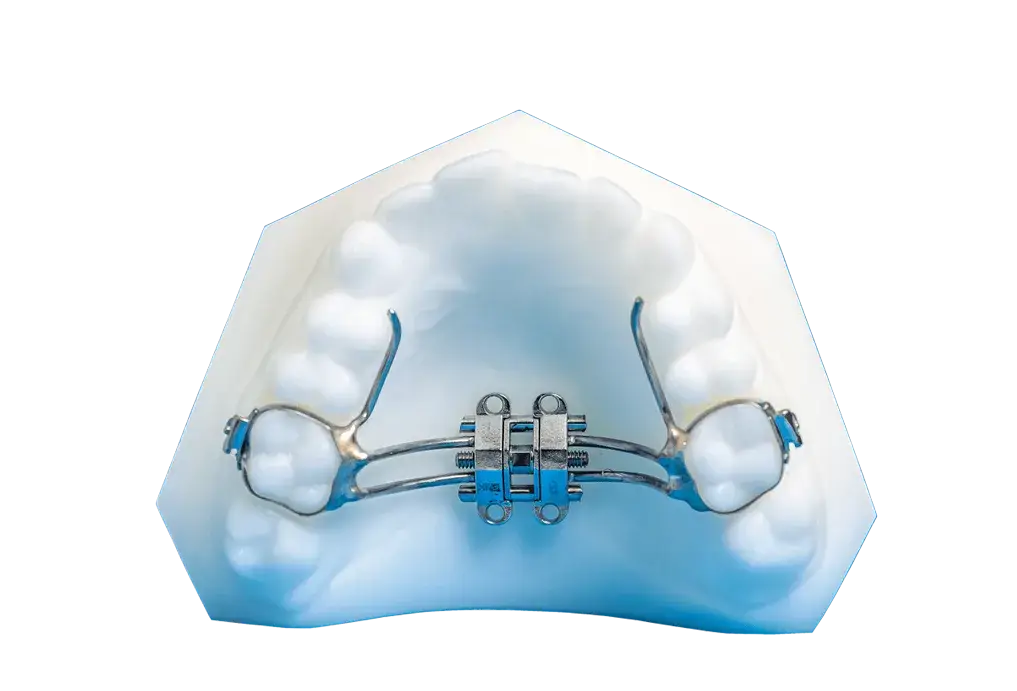
We often  use a custom 3D-printed Haas expander, a fixed device made to fit the inside of your child’s mouth. It attaches to the back teeth and rests against the roof of the mouth, so it stays in place day and night. This eliminates compliance issues. A small expansion screw at the center is turned at home, usually once a day. Each turn widens the palate by a fraction of a millimeter. This is not orthodontics, because we’re not moving teeth. We’re optimizing the skeleton while the bone is still growing. The technical term we use is cranio- facial orthopedics.
When the jaws develop the way they should:
  • The airway opens
  • The tongue rests on the palate where it belongs
  • Nasal breathing becomes easy and habitual
  • Sleep becomes more restorative and rejuvenative
  • The permanent teeth have room to erupt properly
  • Many kids never need traditional braces at all
Most growth appliance care happens between ages 5 and 10. Earlier intervention is usually simpler, faster, and more complete.

Everyone Is Unique and Deserves their own Personal Treatment Plan.

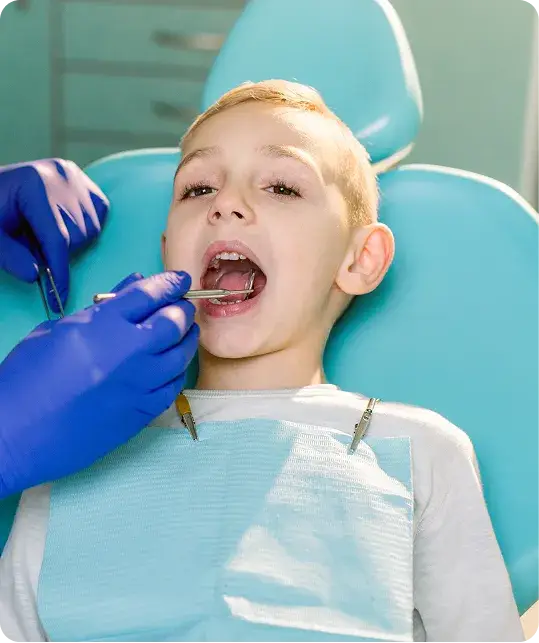
Treatment  typically begins with a comprehensive airway and growth evaluation. We assess breathing patterns, body and oral posture, jaw development, compensations developed,  sleep history, and tongue function. From there, we create a custom treatment plan.
In most cases that involves:
When treatment is successful,  patients sleep better, breathe better, and grow the way nature intended.

MARPE: Expansion When The Window Has Closed.

A newer option for teens and adults whose palate has already fused. MARPE (mini-screw assisted rapid palatal expansion) uses small bone anchors placed in the palate to apply gentle  force directly to the bone. This widens the palate after the growth window has closed, offering  real airway improvement for teens and adults who would otherwise be stuck managing symptoms.
This is a newer option in our practice. We’re incorporating it carefully and case by case. If you’re a teen or adult with a narrow palate and ongoing airway issues, ask whether MARPE may be a fit.

Other Providers see puzzle pieces, Dr. Jen Puts Them Together.

A pediatrician sees whatever problems show up in fifteen minutes. An orthodontist sees crooked teeth. An ENT sees inflammation in the nose and throat. A sleep doctor sees the data from a single night in a lab. Dr. Jen puts all of these  pieces together. The breathing patterns. The tongue posture. The jaw development. The face. The interrupted  sleep. The pain. The behavior. These aren’t separate problems. They’re symptoms of one underlying issue, and the only way to treat it is to look at all of them together.
We work closely with your child’s pediatrician, ENT, allergist, and sleep doctor. They keep doing what they do best.  Dr. Jen keeps everyone moving toward a shared goal: a healthy beautiful rested patient.

"They'll Grow Out of It" Is Not a Treatment Plan.

Successful outcomes depend on more than the procedure itself.
A lot of parents have heard some version of this.  Mouth breathing will stop on its own or is just a phase. Crowded teeth are “just genetics.” Snoring is normal.  Bedwetting is normal. Restless sleep is normal. If your gut has been telling you something else, remember, your gut is usually right! These patterns don’t usually fix themselves. But the earlier you catch them, the easier they are to change.

An Airway Insight Visit is a Careful Look at How Your Child is Breathing, Sleeping, and Developing. 

If the patterns described on this page are showing up in your child, you’ll walk out with a plan and a clear sense of what to do next. If they aren’t, you’ll walk out reassured. A comprehensive airway and growth evaluation looks at the whole picture, breathing, sleep, development, and function, so you finally get real answers.